How it works
The broker is the keystone.
Real data and real credentials stay behind the broker. It issues scope-bound, short-lived credentials and sets enforcement inside the database itself, so an app physically can't reach data it wasn't cleared for. One mechanism protects every tool at once.
Build time runs on synthetic data.
While your team builds, the coding tool works against synthetic, schema-faithful data inside a sandboxed workspace, with outbound traffic denied by default. The dangerous paste into an outside model has nothing real to leak. The schema looks right, the logic develops correctly, and no live record ever leaves the boundary.
Runtime serves scoped, masked, logged data.
When the app goes live, it gets exactly the rows and columns it needs, masked and logged, through a credential that can reach nothing else. It runs in isolation inside your cloud and serves through an SSO-gated URL. Every read is recorded.
The registry and the audit trail
Every app is on the map.
Each app enrolls in a registry with an owner, a purpose, the data it touches, and its governance tier. The CFO can pull a clean inventory and lineage report for any app, and can turn one off. New or sensitive data sources surface a per-app approval; routine, low-sensitivity sources clear once under standing policy, so the hundredth finance app is as light to approve as the first.
Walkthrough
A 13-week cash forecast, governed end to end.
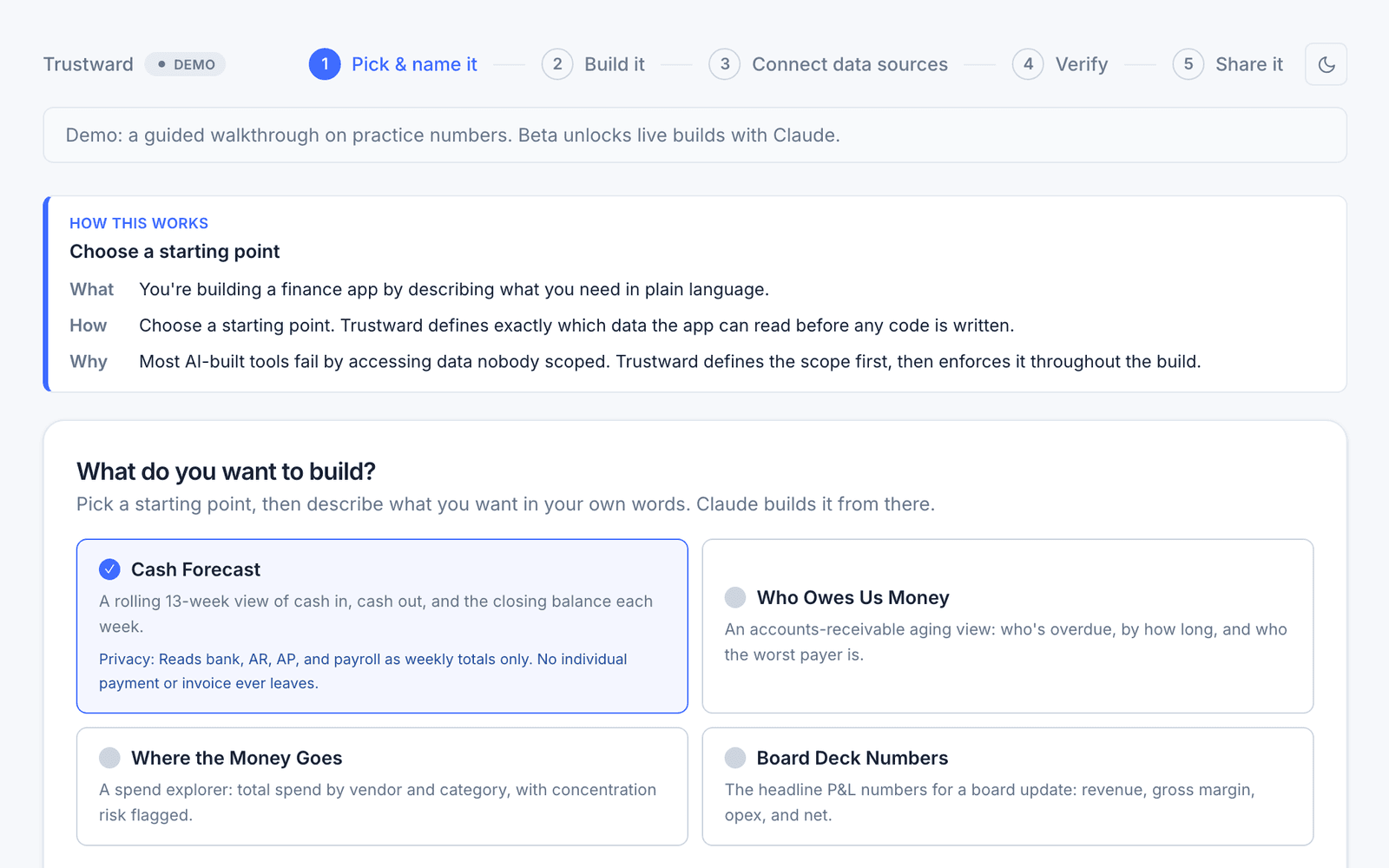
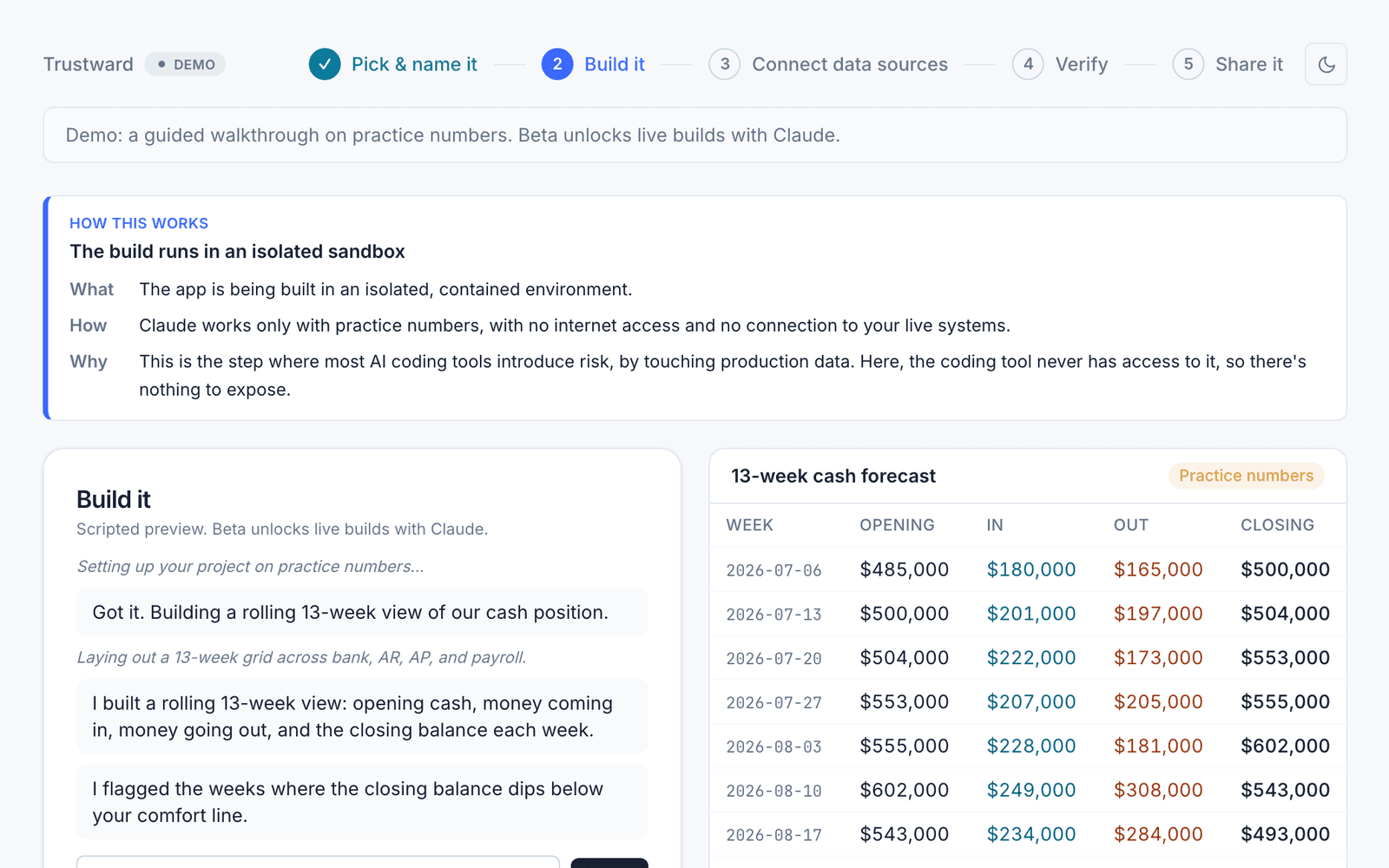
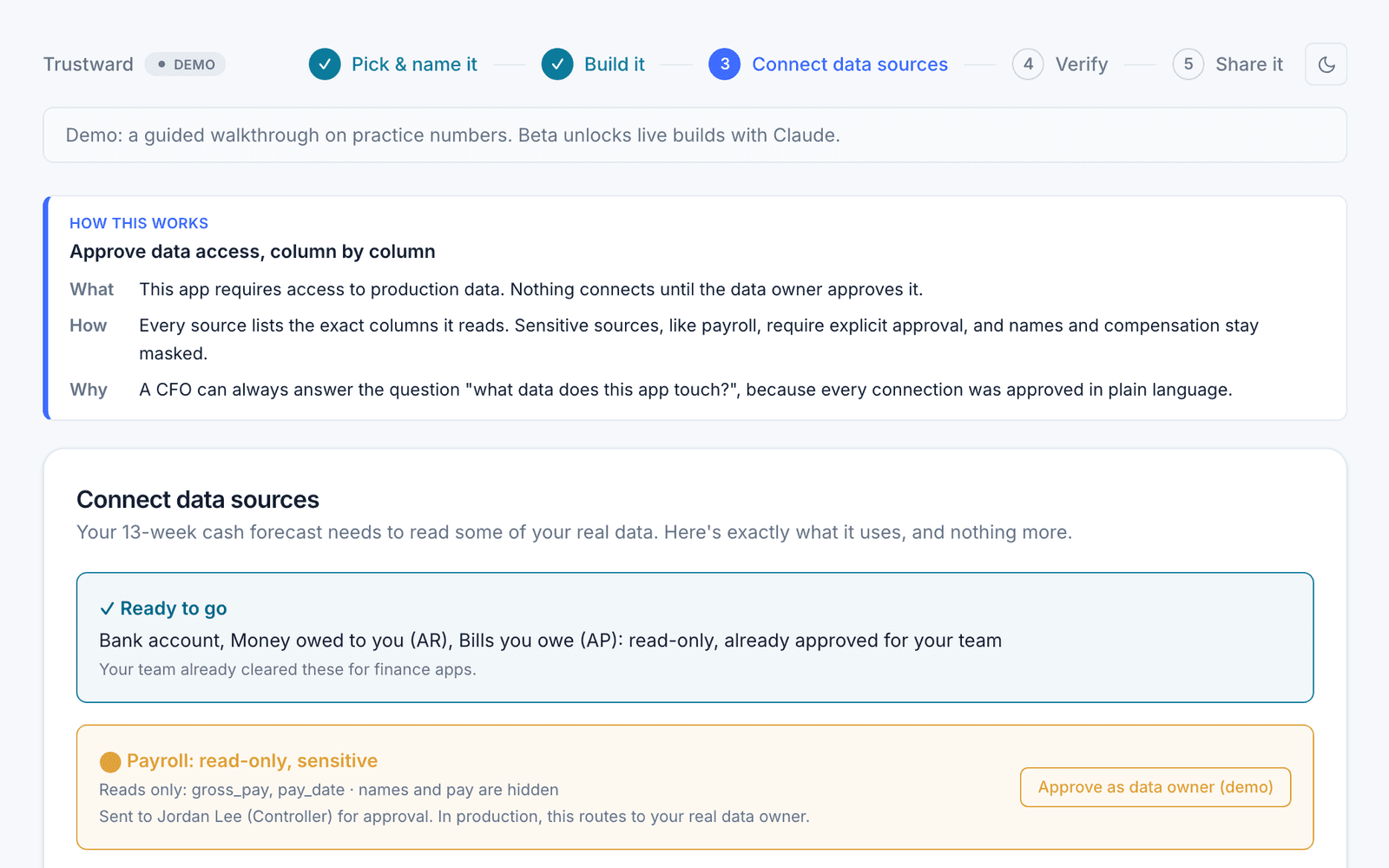
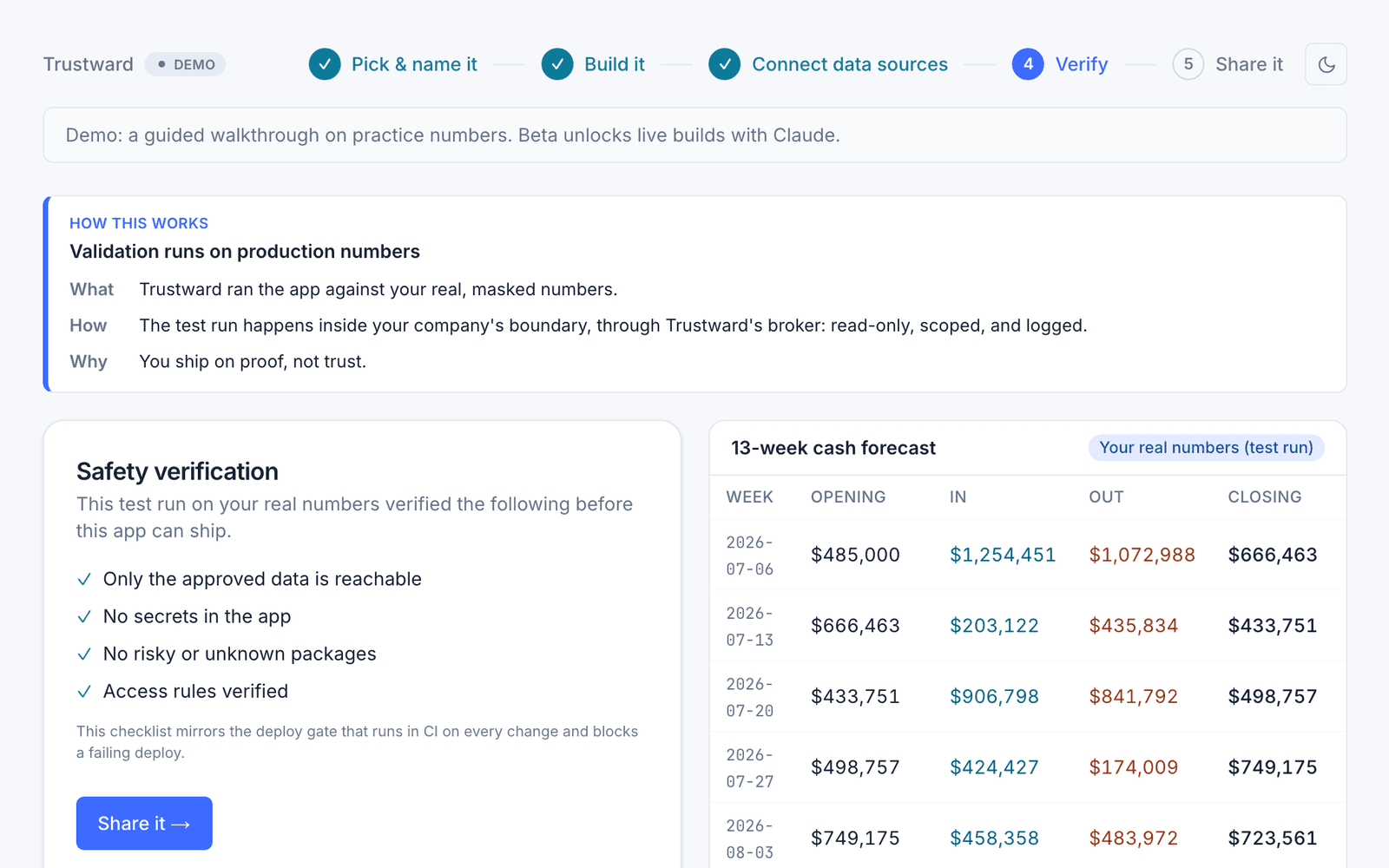
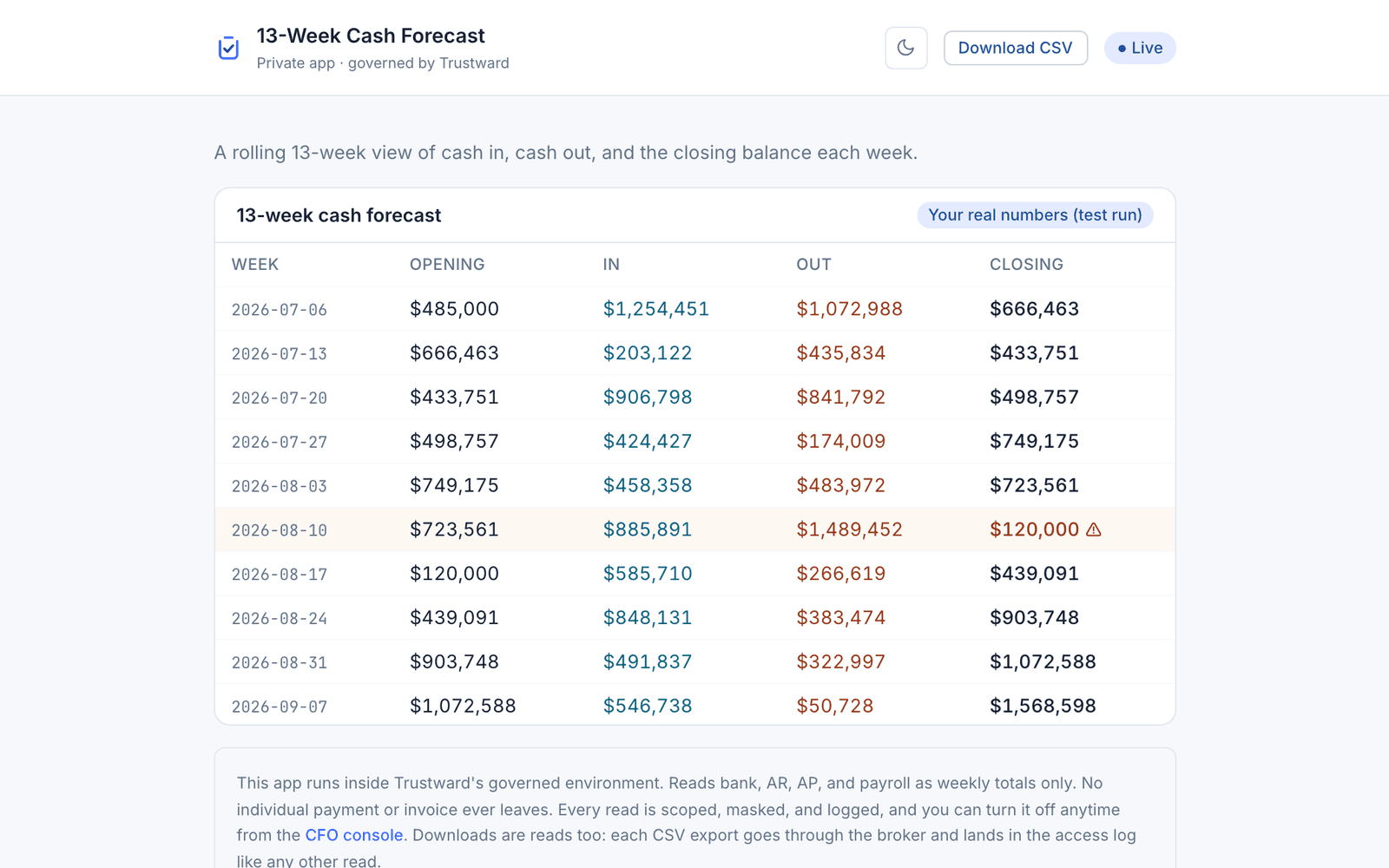
An analyst picks a finance starting point and names the app. Its data scope is set before any code is written.
One workflow, one team, governed the whole way, and nobody had to slow down.
Want the technical version?
If you're the analyst or engineer doing the building, there's a page for you: the broker as plain Postgres, building on stand-in data, least privilege from your real queries, the deploy gates, and MCP. The CFO never has to read it.

See it on your own workflow.
Start with one workflow, working directly with our team.